What is Semrush? Semrush is an all-in-one digital marketing platform used for SEO, keyword research, rank tracking, site audits, competitor analysis, backlink analytics, content marketing, and PPC research.
Marketers use it to discover search opportunities, monitor performance, analyze competitors, and improve online visibility.
It is widely used by SEO specialists, agencies, in-house teams, and content marketers because it combines research, tracking, and optimization tools in one platform.
Still unsure if Semrush is the right fit for your business? Message us on WhatsApp for a practical recommendation based on your goals, budget, and growth stage.
What Is Semrush in Digital Marketing?
In digital marketing, Semrush is a research and decision-making platform that helps marketers find opportunities, analyze competitors, improve SEO performance, and plan smarter campaigns.
Rather than being a single function tool, it combines multiple workflows in one system, making it easier to manage search visibility and marketing performance from one place.
Semrush is commonly used for:
keyword research.
Domain Overview.
rank tracking.
site audit workflows.
competitor analysis.
backlink analytics.
content planning.
PPC research.
This is why Semrush is widely used by SEO specialists, agencies, in-house teams, and content marketers.
Instead of switching between separate tools for rankings, audits, keyword data, and competitor research, marketers can handle most of that work within one platform.
What Does Semrush Do?
The easiest way to understand what Semrush does is to look at the core jobs it supports in everyday marketing work.
Semrush helps teams discover search opportunities, monitor organic visibility, analyze competitors, improve site health, evaluate backlinks, and support both content and paid acquisition strategies.
Here is the practical breakdown.
Feature | What it helps with | Typical users |
Keyword research | Find keyword opportunities, intent, and difficulty | SEO and content teams |
Rank tracking | Monitor search visibility over time | SEO specialists and agencies |
Site audit | Detect technical SEO issues | Technical SEO and in-house teams |
Competitor analysis | Benchmark domains and content gaps | Growth and strategy teams |
Backlink analytics | Evaluate links and authority signals | SEO and outreach teams |
Content marketing toolkit | Plan and optimize content | Content marketers |
PPC research | Analyze paid keyword and ad opportunities | Performance marketers |
Domain overview | Review visibility and performance at a glance | Marketers and analysts |
Keyword gap | Compare keyword overlap and missed opportunities | SEO teams and agencies |
Keyword research
One of the main reasons marketers use the Semrush SEO tool is keyword research. Semrush helps users find the terms people are actually searching for, estimate search demand, review keyword difficulty, understand intent, and identify related terms worth targeting.
This makes it useful for building editorial plans, mapping content to search behavior, prioritizing commercial pages, and identifying long-tail opportunities.
For many users, keyword research is the first thing they do in the platform because it directly answers strategic questions about what to target and why.
Rank tracking
Rank tracking helps marketers see whether optimization work is improving visibility. Rankings shift over time, and without a structured way to monitor them, it becomes difficult to know whether content updates, technical improvements, or link acquisition efforts are actually working.
Semrush allows teams to monitor keyword movements, compare desktop and mobile performance, and track visibility across locations and markets.
Site audit
The site audit feature is one of the most practical parts of the platform because it turns technical SEO from a vague concern into a structured list of problems and priorities.
Teams use it to identify issues such as crawlability problems, broken links, missing metadata, duplicate content, internal linking weaknesses, and other technical barriers that may limit search performance.
Competitor analysis
Competitor analysis is another major reason marketers invest in Semrush. Instead of assuming who your search competitors are, the platform helps reveal which domains compete for the same keywords and where their strengths lie.
This allows teams to compare performance, identify visibility gaps, review high-performing pages, and discover areas where competitors are outranking them.
Backlink analytics
Backlink analytics helps users examine link profiles, referring domains, authority patterns, and potential weaknesses or opportunities.
This is especially valuable for SEO teams running backlink audits, analyzing competitor link acquisition, or trying to identify outreach opportunities.
If you are researching link-building strategy, Semrush is often used as the analysis layer that supports those decisions.
Content marketing toolkit and PPC research
Semrush is also used beyond classic SEO workflows. The content marketing toolkit supports topic discovery, content planning, search intent alignment, and optimization workflows.
At the same time, PPC research helps advertisers and performance teams study paid keywords, competitor ads, and messaging trends. This is one reason the platform appeals to broader marketing teams rather than only SEO practitioners.
How Does Semrush Work?
If your main question is what is Semrush and how does it work, the practical explanation is simple.
Semrush collects and organizes search, keyword, domain, backlink, and advertising data into reports that marketers can use to make decisions faster.
Instead of manually gathering scattered information from multiple sources, you enter a keyword, domain, or competitor into the platform and receive structured insights.
These insights help answer questions such as which keywords to target, which pages need improvement, where competitors are stronger, which technical issues are hurting performance, and which visibility gaps are still open.
A typical Semrush workflow looks like this:
Review a domain in Domain Overview
Analyze search competitors and overall visibility
Research target keywords and supporting clusters
Run a site audit to identify technical issues
Set up rank tracking for important targets
Compare competitor positioning through keyword gap analysis
Use the findings to guide SEO, content, and PPC decisions
That is why Semrush works well in real-world marketing operations. It is not just a reference database. It is a decision-support environment that helps teams move from research to action.
What Is Semrush Used For?
Marketers use Semrush to turn raw search data into clear actions. Instead of guessing what to optimize next, they use the platform to identify keyword opportunities, compare competitors, uncover technical SEO issues, and track performance over time.
Common use cases include:
finding keyword opportunities for new pages.
tracking rankings for target keywords.
auditing websites for technical SEO issues.
analyzing competitor strategies and traffic gaps.
reviewing backlink profiles and link opportunities.
planning SEO content around real search demand.
researching paid keywords and ad competitors.
managing multiple SEO workflows across clients or teams.
This makes Semrush useful not just for SEO specialists, but also for content marketers, agencies, in-house teams, and performance marketers who need one platform for research, analysis, and execution.
Key Semrush Features Marketers Use Most
The most widely used Semrush features usually fall into the same predictable group because they support the daily work of most marketers.
Domain Overview is often the first stop when reviewing a site or competitor because it provides a quick snapshot of visibility and performance.
Keyword research remains a core use case because it supports both SEO and content planning.
Rank tracking matters because teams need to monitor progress over time.
Site audit matters because technical issues can quietly suppress performance.
Competitor analysis matters because search results are always relative to others in the market.
Backlink analytics remains important for authority and link strategy. Keyword gap helps identify missed opportunities.
And PPC research broadens the platform’s usefulness for paid teams.
When people ask for a Semrush review, these are usually the features that define whether the tool feels valuable or not.
Is Semrush Free?
No, Semrush is not fully free. It is mainly a paid platform, but it offers limited free access for users who want to test some features before subscribing.
That free access may be enough for basic exploration, but it becomes restrictive quickly if you need regular keyword research, rank tracking, site audits, competitor analysis, or multi-project work.
In practice, Semrush is best viewed as a paid marketing platform with limited free testing options.
Is Semrush Good for Beginners?
Yes, Semrush can be good for beginners, but only when it is used with a clear structure. The issue is not that the platform is too advanced.
The issue is that it includes many tools, reports, and workflows, which can feel overwhelming at first.
For beginners, the best approach is to focus on a small number of core tasks:
review a site in Domain Overview.
perform keyword research.
run a site audit.
compare a few competitors.
set up rank tracking for a limited set of keywords.
That is usually enough to learn how the platform works without getting lost. This is also why interest in a Semrush digital marketing course makes sense, since beginners often find the platform easier when they follow a structured learning path rather than exploring it randomly.
If Semrush feels broader than what you need, it may be worth comparing it with other options in this roundup of best digital marketing tools for small business.
Is Semrush Only for SEO?
No, Semrush is not only for SEO. That assumption is outdated. While SEO remains a central use case, Semrush also supports content marketing, competitor intelligence, PPC research, visibility benchmarking, and broader market analysis.
This is why marketers outside pure SEO teams still use it. A content strategist can use it to identify topics and intent.
A performance marketer can use it for PPC research. A strategist can use it for competitor analysis and market positioning.
An agency can use it to connect reporting, audits, rankings, and opportunity discovery across multiple clients.
So if someone asks is Semrush only for SEO, the practical answer is no. SEO may be the entry point, but the platform is broader than that.
To understand where Semrush fits in the bigger picture, it also helps to look at the role of SEO in digital marketing and why it matters.
Semrush vs Other Marketing Tools
Semrush is often compared with several marketing tools, but these platforms do not all serve the same purpose.
Some focus on SEO, others on traffic analytics, paid search, content discovery, or market intelligence.
The real value of Semrush becomes clearer when you compare it based on workflow, use case, and depth of analysis rather than assuming every tool is a direct substitute.
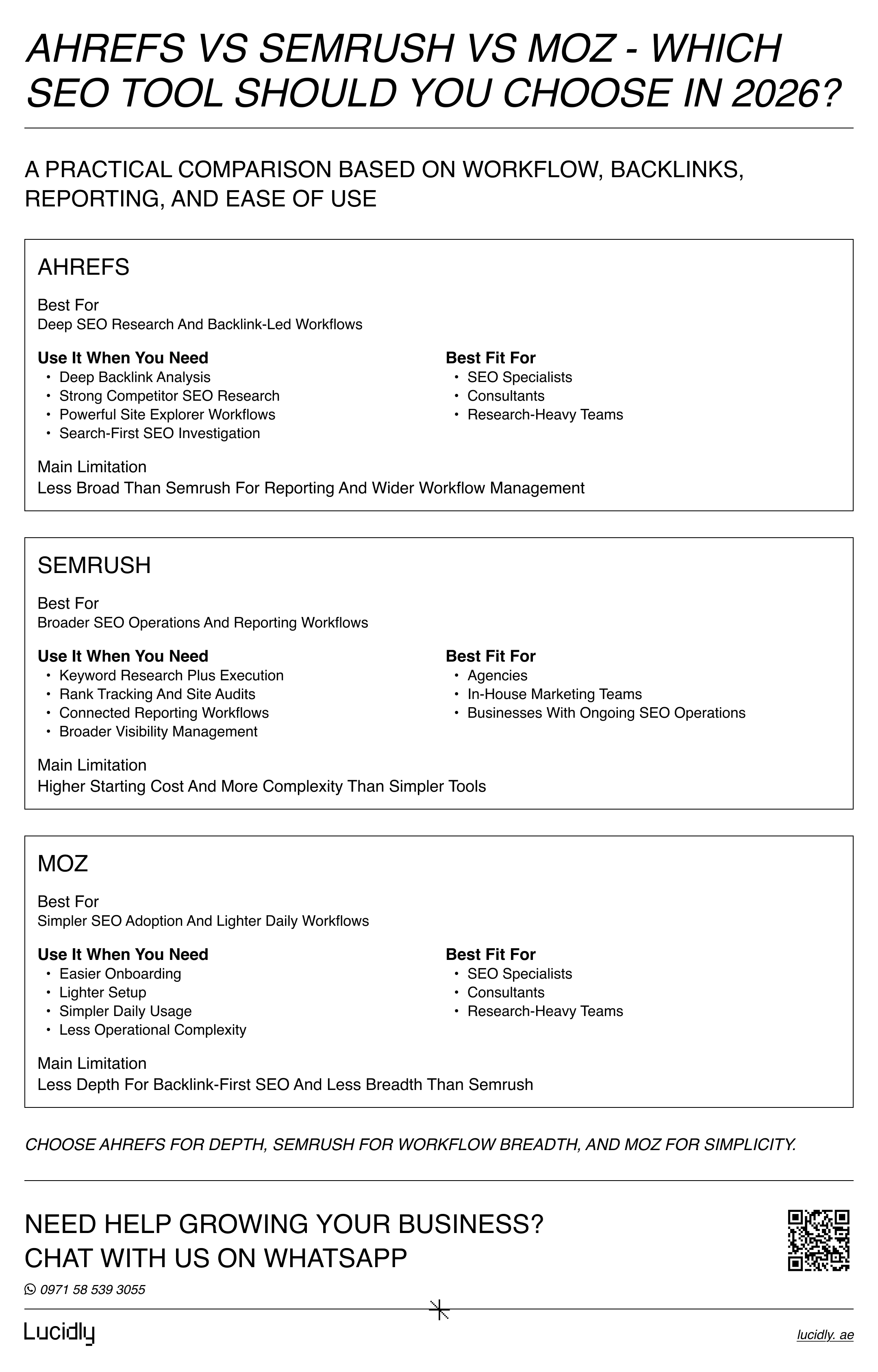
Ahrefs vs Semrush
The Ahrefs vs Semrush comparison usually comes down to workflow and scope.
Semrush is often the better fit for marketers who want an all-in-one platform covering SEO, content marketing, competitor intelligence, and PPC research.
Ahrefs is often preferred by users who want a more SEO-focused workflow centered on organic search, backlinks, and keyword analysis.
Semrush vs Google Analytics
The Semrush vs Google Analytics comparison is different because the two tools solve different problems.
Semrush helps marketers research keywords, track rankings, analyze competitors, and find visibility opportunities.
Google Analytics helps them understand what users do after they arrive on the site, including behavior, engagement, and conversions. Semrush supports search strategy, while Google Analytics supports performance measurement.
Search Console vs Semrush
Search Console vs Semrush is another comparison where the tools complement each other more than they compete.
Search Console provides first-party data directly from Google about your own website, including impressions, clicks, indexing, and query performance.
Semrush provides broader market data, competitor insights, keyword opportunities, and comparative analysis.
Search Console shows what is happening on your site in Google, while Semrush shows the wider search landscape around it.
Google Keyword Planner vs Semrush
Google Keyword Planner vs Semrush usually comes down to advertising versus broader search marketing.
Keyword Planner is mainly built for Google Ads keyword planning and cost estimates.
Semrush goes far beyond that by supporting SEO keyword research, competitor analysis, domain overview, keyword gap analysis, rank tracking, and content planning. Keyword Planner is narrower, while Semrush is more comprehensive.
BuzzSumo vs Semrush
The BuzzSumo vs Semrush comparison matters most for content teams.
BuzzSumo is more focused on content discovery, trending topics, and performance signals tied to content reach and engagement.
Semrush is more focused on search visibility, keyword opportunities, and content planning based on SEO demand.
BuzzSumo is more content-discovery oriented, while Semrush is more search-strategy oriented.
Similarweb vs Semrush
Similarweb vs Semrush is usually a comparison between market intelligence and search execution.
Similarweb is often used for high-level traffic benchmarking, competitor traffic estimates, and broader market visibility.
Semrush is more practical for hands-on SEO and PPC execution, including keyword research, site audits, rank tracking, backlink analytics, and competitor analysis. Similarweb is broader at the market level, while Semrush is more actionable for daily optimization work.
Is Semrush Worth It for Agencies and In-House Teams?
In many cases, yes. Semrush is often worth the investment for teams that rely on SEO, content marketing, competitor analysis, and ongoing search visibility improvements.
Its value becomes clearer when it saves time, centralizes workflows, and helps teams make better decisions faster.
It is often worth it for:
agencies that manage multiple clients and need one platform for keyword research, rank tracking, site audits, competitor analysis, and backlink analytics
in-house teams that actively publish content, monitor competitors, improve technical SEO, and plan search-driven growth
marketing teams that want one system for research, analysis, reporting, and prioritization
It may be less worthwhile for:
very small websites with limited goals
solo users with a minimal budget
businesses that only need occasional keyword checks
teams that are not investing seriously in SEO, content, or PPC
For agencies and established in-house teams, Semrush often justifies its cost through efficiency, clarity, and better prioritization.
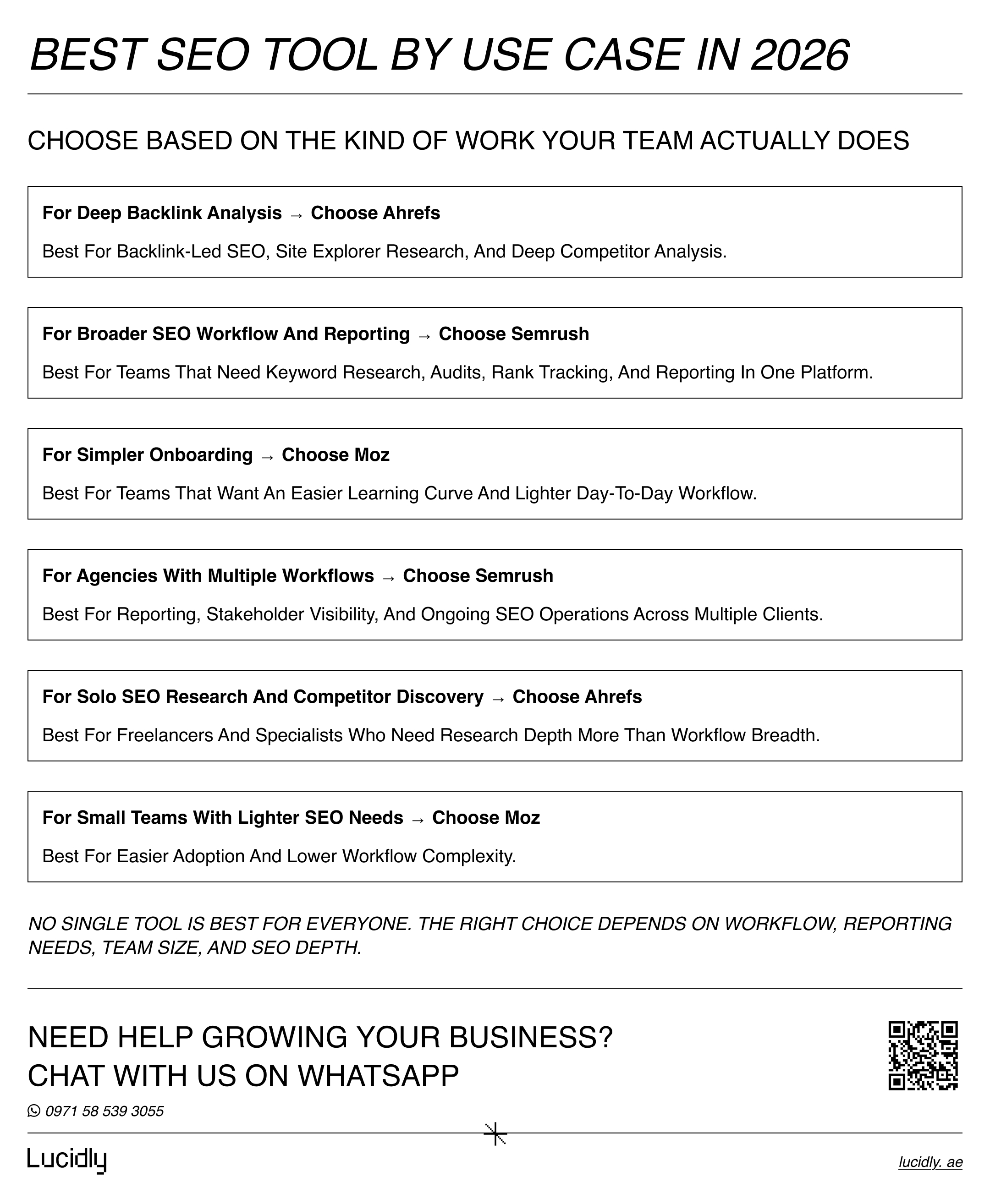
Semrush Review Final Assessment
Any honest Semrush review should end with a practical conclusion. Semrush is one of the strongest choices for marketers who need more than a basic keyword tool.
It supports keyword research, rank tracking, site audit workflows, competitor analysis, backlink analytics, domain overview reporting, keyword gap discovery, content planning, and PPC research in one platform.
Its strengths are breadth, workflow coverage, and practical decision support. Its weaknesses are that it can feel heavy for new users and may be too expensive or too large for those with very limited needs.
But for serious marketers, agencies, and in-house teams, Semrush is often a strong fit because it helps connect data with action.
If you want help choosing the right SEO tool within a broader growth strategy, our digital marketing services page is a practical next step.
FAQs
What is Semrush used for?
Semrush is used for keyword research, rank tracking, site audits, competitor analysis, backlink analytics, content planning, domain overview reporting, keyword gap analysis, and PPC research. Marketers use it to improve search visibility and make better digital marketing decisions.
Is Semrush good for beginners?
Yes, Semrush can be good for beginners if they start with a focused workflow that includes Domain Overview, keyword research, site audit, and rank tracking rather than trying every feature at once.
Is Semrush only for SEO?
No. Although SEO is a major use case, Semrush is also used for content marketing, competitor research, PPC research, and broader digital marketing analysis.
What is the difference between Semrush and Google Analytics?
Semrush is mainly used for search research, competitor intelligence, and visibility improvement. Google Analytics is mainly used for understanding website traffic, user behavior, and conversions.
Is Semrush free?
Semrush is not fully free. It offers limited free access, but the full platform and its real value are part of a paid subscription.
What is Semrush tool?
Semrush is a digital marketing platform made up of multiple tools for SEO, keyword research, rank tracking, site audits, backlink analysis, competitor research, content planning, and PPC research.
What is Semrush and how does it work?
Semrush works by organizing keyword, search, domain, backlink, and advertising data into reports and workflows that help marketers research, analyze, and improve digital visibility.
Is Semrush worth it for agencies and in-house teams?
Yes, in many cases it is. Agencies and serious in-house teams often find Semrush worth the investment because it combines research, monitoring, and analysis in one platform.
What is Semrush? In practical terms, Semrush is a digital marketing platform that helps marketers turn data into action.
It is used for keyword research, competitor analysis, rank tracking, site audits, backlink evaluation, content planning, and PPC research.
If you need one platform for ongoing SEO and search marketing work, Semrush is a strong option.
If you are still unsure whether Semrush is the right fit for your business, message us on WhatsApp for a practical recommendation based on your goals, budget, and growth stage, or use the phone numbers listed on our Contact Us page.
References
Semrush. What is Semrush? (Semrush)
Semrush. Getting Started with Semrush: A Tutorial for Navigating the Essentials. (Semrush)
Google. How Google Analytics works. (Google Help)