shopify theme customization helps merchants shape a storefront around real business goals, not just visual preferences.
In the UAE, where mobile shopping, competition, and customer expectations are high, theme work should improve usability, speed, and conversion together.
That means understanding how Liquid, sections, templates, and design systems affect the storefront before making changes.
A smart approach creates a store that looks stronger, works faster, supports growth, and turns more visits into sales without creating unnecessary technical problems later.
Message Lucidly on WhatsApp if you need help with Shopify theme customization and Liquid development.
What is Shopify theme customization?
Before making changes to a Shopify storefront, merchants need to understand what theme customization actually includes. It is broader than visual styling and more strategic than simple editing.
shopify theme customization is the process of adjusting a Shopify theme so the storefront better matches business needs, customer behavior, and conversion goals.
It often includes:
layout changes.
content structure improvements.
mobile experience refinements.
product page adjustments.
custom components beyond default theme settings.
The level of work can vary depending on the store.
Some stores only need light changes using existing theme controls.
Others need a custom shopify theme approach that supports a specific brand, product logic, or sales flow.
The value of theme work is not in changing the design for its own sake. It is in improving how the storefront performs for real users.
That is why merchants who want to customise Shopify theme elements effectively should think beyond appearance. Strong theme work can improve:
Before investing in theme changes, it is worth understanding when Shopify is the right fit. Read: What Is Shopify? Pros, Cons, and When It’s the Right Ecommerce Platform (2026 Guide).
How Shopify themes work behind the storefront
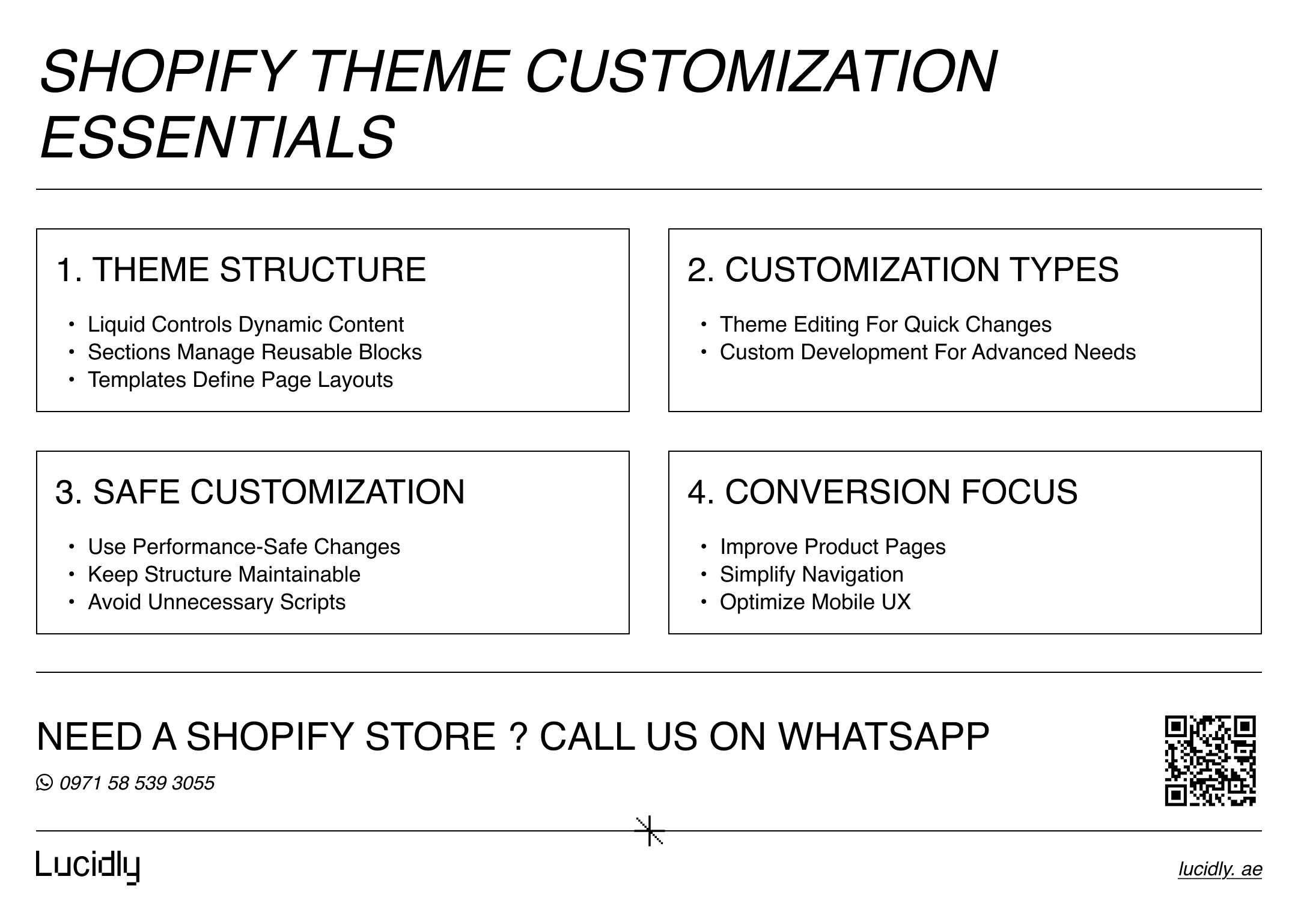
To handle shopify theme customization properly, it helps to understand the structure behind what users see. That structure is what determines how flexible, maintainable, and scalable the storefront can become.
The role of Liquid in Shopify themes
At the core of Shopify themes is Liquid, the templating language used to control how content is rendered.
Liquid connects store data with the storefront layout, allowing products, collections, navigation items, pricing, and customer-facing content to appear dynamically across the site.
This is where a shopify liquid developer becomes valuable.
When merchants need logic that goes beyond standard theme settings, Liquid makes it possible to shape how content is displayed instead of only changing how it looks.
Good Shopify Liquid development allows customization without turning the theme into a fragile set of one-off edits.
Sections templates and reusable structure
Shopify themes are also built around sections and templates. Sections help merchants manage reusable blocks of content, while templates define how specific page types are structured.
That structure matters because not every change requires full development.
In some cases, section-based flexibility is enough.
In others, merchants need deeper shopify theme development to support more advanced layouts, conversion paths, or custom content behavior.
When sections and templates are used well, the theme becomes easier to scale and easier to manage as the store grows.
What’s the difference between theme editing and custom development?
This is one of the most important distinctions for merchants planning theme work.
Not every storefront change needs code, but not every business goal can be solved with theme settings alone.
Theme editing
Theme editing usually means working inside the existing controls of the theme. That includes changing colors, typography, spacing, homepage order, and section content using the built-in editor.
For many stores, shopify theme editing is enough for day-to-day improvements. It is fast, accessible, and useful for merchants who want to update presentation without changing theme logic.
Custom development
Custom development goes deeper. It involves changing structure, adding new components, adjusting how templates behave, or building new functionality into the storefront.
This is where shopify theme development differs from basic editing.
A merchant may need custom development to create better filtering, more flexible product templates, stronger landing pages, or a cleaner purchase journey.
A truly custom shopify theme is not just edited differently. It is built to support specific commercial goals.
When merchants need each option
The right path depends on the type of problem being solved. Use theme editing when the goal is presentation. Use development when the goal is behavior, flexibility, or conversion.
A simple way to think about it is this:
Use editing for layout adjustments and standard content control.
Use development for new logic, custom sections, and structural changes.
Use specialist help when changes affect maintainability, performance, or growth.
That difference is at the heart of good shopify theme customisation.
How do I customise themes without breaking updates?
Many merchants want flexibility without creating technical debt. That is the right concern, because rushed edits often create future maintenance problems.
Use a structured approach
Safe shopify theme customization starts with planning. Changes should be organized around business goals, not random requests added over time. That makes the theme easier to update, test, and maintain.
Focus on performance safe customisations
Not every customization is worth the cost. Some additions make the storefront heavier without improving user experience.
A safer approach includes:
keeping code additions purposeful
avoiding unnecessary scripts
reducing layout clutter
testing impact on mobile speed
protecting page stability during changes
These performance-safe customisations help merchants improve the storefront without hurting load times or usability.
Protect maintainability
Theme work should also stay manageable after launch. That means changes should be documented, kept organized, and added in a way that does not make future updates harder than necessary.
Merchants who want to customise Shopify theme files responsibly should aim for clean structure, limited complexity, and a system that can still evolve without constant rework.
Which Shopify theme changes usually improve conversion?
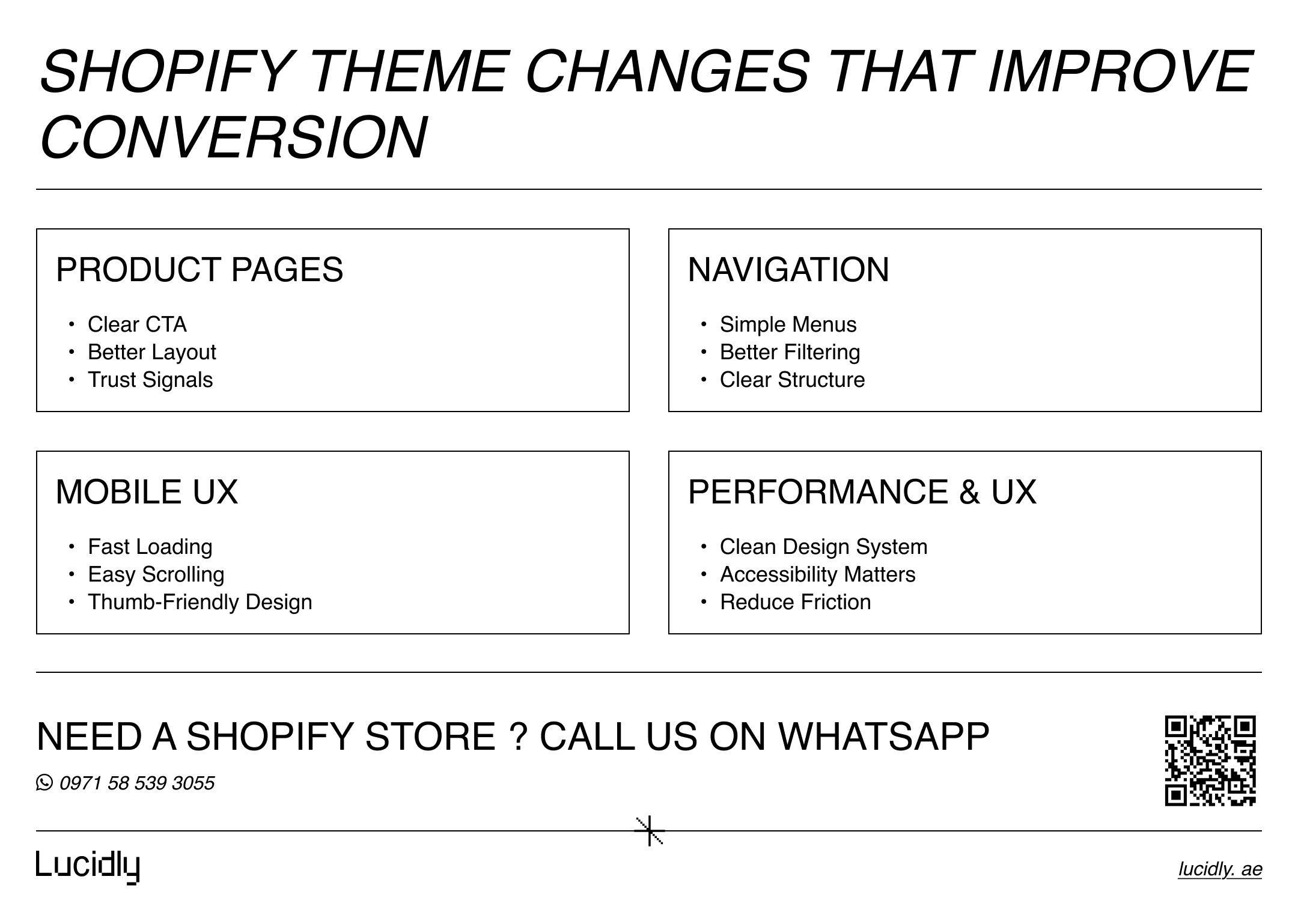
Not all customization work improves results. The most valuable changes usually make the storefront clearer, easier to navigate, and easier to trust.
Product page improvements
Product pages often have the biggest impact on conversion. Better information hierarchy, clearer calls to action, more usable variant selection, and stronger trust signals can improve decision-making quickly.
Before making changes, focus on the parts of the page that shape purchase confidence most directly:
product title clarity.
pricing visibility.
variant selection usability.
shipping or return reassurance.
call to action placement.
mobile readability.
This is where shopify theme customization becomes commercially useful rather than purely visual.
Navigation and collection usability
Users convert more easily when product discovery feels simple. Clear menus, better filtering, stronger collection structure, and fewer dead ends reduce friction across the storefront.
Mobile first refinements
In the UAE, mobile usability matters heavily. Button size, content spacing, sticky purchase actions, and clear scrolling behavior often matter more than decorative changes.
Accessibility and design systems
Stronger themes also pay attention to accessibility. Readable contrast, consistent interaction patterns, and clear visual structure improve experience for more users.
Well-managed design systems help teams make theme decisions that stay consistent across the storefront instead of becoming fragmented over time.
Conversion focused Shopify theme development in the UAE
Merchants in the UAE often compete in fast-moving categories where presentation alone is not enough. Speed, clarity, and trust matter just as much as branding.
That is why shopify theme customization should support local buying behavior, especially on mobile.
Shoppers expect storefronts to load quickly, communicate clearly, and guide them toward purchase without confusion. A theme that looks polished but creates friction will underperform.
Strong shopify theme development in this market usually focuses on streamlined navigation, better mobile flow, cleaner product pages, and customization choices that support sales rather than complexity.
If your store also needs a smoother bilingual experience, read: Arabic and RTL on Shopify: Language Setup, Bilingual Navigation, and UX Tips.
Explore Lucidly’s Shopify development services in the UAE for support with Shopify theme customization and Liquid development.
When to hire a Shopify Liquid developer
Some changes can be handled inside the theme editor. Others require deeper technical work to support effective shopify theme customization.
A merchant should consider a shopify liquid developer when the storefront needs custom sections, advanced template logic, safer implementation of conversion changes, or theme improvements that go beyond built-in controls.
This is especially true when business growth depends on a cleaner structure or more flexible experience than the default theme can provide.
The goal is not to over-engineer the store. It is to apply Shopify Liquid development where it creates measurable value.
If your store is growing beyond standard theme needs, read: Shopify Plus UAE: Who Needs It, What You Get, and When It’s Overkill.
FAQs
What is Shopify Liquid?
Shopify Liquid is the templating language that controls how store data is rendered across pages, sections, and templates in a Shopify theme.
What’s the difference between theme editing and custom development?
Theme editing uses built-in settings inside the theme. Custom development changes structure, logic, or storefront behavior to support more specific business needs.
How do I customise themes without breaking updates?
Use a structured approach, keep changes maintainable, avoid unnecessary code, and test customizations carefully before publishing them.
Which theme changes usually improve conversion?
The strongest improvements often come from product page structure, mobile usability, navigation clarity, performance, and accessibility.
shopify theme customization works best when it supports business goals, user experience, and performance together.
The strongest results usually come from changes that improve structure, clarity, and conversion instead of adding visual complexity.
When Liquid, sections, templates, and conversion logic are handled strategically, the theme becomes a practical growth tool rather than just a design layer.
Need help with Shopify theme customization, Liquid development, or conversion-focused theme improvements? Message Lucidly on WhatsApp or use the contact numbers on our Contact Us page.
References
Shopify Help Center. Customizing themes. Available at: https://help.shopify.com/en/manual/online-store/themes/customizing-themes (Shopify Help Center)
Shopify Developers. Liquid templates. Available at: https://shopify.dev/docs/storefronts/themes/architecture/templates/liquid-templates (Shopify)
Shopify Developers. Sections.