Lead generation in digital marketing is not about getting more traffic. It is about turning the right traffic into real enquiries that can become customers.
Many businesses invest in SEO, ads, and content but still struggle because they lack a clear system that connects traffic, messaging, landing pages, and follow-up.
In 2026, the businesses that grow are the ones that build structured lead systems, not random campaigns, and continuously improve conversion and lead quality over time.
For practical support in improving your lead generation system, Message Lucidly on WhatsApp.
What Is Lead Generation in Digital Marketing and Why It Matters
Lead generation in digital marketing is not just about attracting visitors. It is about turning that traffic into real enquiries that can become customers.
Instead of focusing only on visibility, businesses need to focus on actions such as form submissions, calls, or direct enquiries.
This approach matters because it connects marketing efforts to actual business results. When content, landing pages, forms, and follow-up systems work together, marketing becomes measurable and more effective at generating opportunities.
It also helps clarify the difference between:
Traffic: people who visit your website or content.
Leads: people who take a meaningful action and show real interest.
A well-structured lead generation system ensures that digital marketing is not just driving visits, but consistently creating qualified opportunities for growth.
How to Generate Leads in Digital Marketing (Step-by-Step)
A structured approach makes lead generation predictable and scalable.
Step 1: Attract the right audience
The first step in lead generation in digital marketing is reaching people who are actually likely to convert.
Use SEO to capture search intent.
Use paid ads to reach high-intent users.
Use content to educate and build trust.
Focus on relevance, not just reach.
Step 2: Use high-converting landing pages
Traffic alone does not generate leads without strong pages.
Use focused landing pages with one clear goal.
Add a strong headline and value proposition.
Keep navigation minimal to reduce distraction.
Highlight benefits, not just features.
Step 3: Offer clear lead magnets
Users need a reason to convert.
Use lead magnets such as guides, offers, or consultations.
Match the offer with user intent.
Keep the value clear and immediate.
Avoid generic or weak offers.
Step 4: Simplify forms and capture data
Conversion depends on ease of action.
Use short forms with only essential fields.
Reduce friction in the process.
Make submission fast and mobile-friendly.
Test different form lengths to improve results.
Step 5: Use follow-up and nurture systems
Leads do not convert without proper follow-up.
Use a CRM to manage enquiries.
Build email nurture sequences.
Respond quickly to increase conversion.
Move leads through MQL → SQL stages.
This is the difference between random activity and real digital lead generation.
While these steps provide a strong foundation, applying them within a broader strategy is what drives consistent results. This is explained in Top Digital Marketing Strategy Tips for More Leads in 2026.
Digital Marketing Channels That Generate the Best Leads
Not all channels produce the same results. The best ones depend on intent.
SEO: strong for long-term, high-intent traffic.
Google Ads: effective for immediate demand.
Social media ads: useful for awareness and retargeting.
Email marketing: strong for nurturing and conversion.
Content marketing: supports trust and decision-making.
A good lead gen in digital marketing strategy uses multiple channels working together.
To see how this works in a property-focused context, read our guide to Digital Marketing for Real Estate Agents: How to Turn Property Traffic Into Leads 2026.
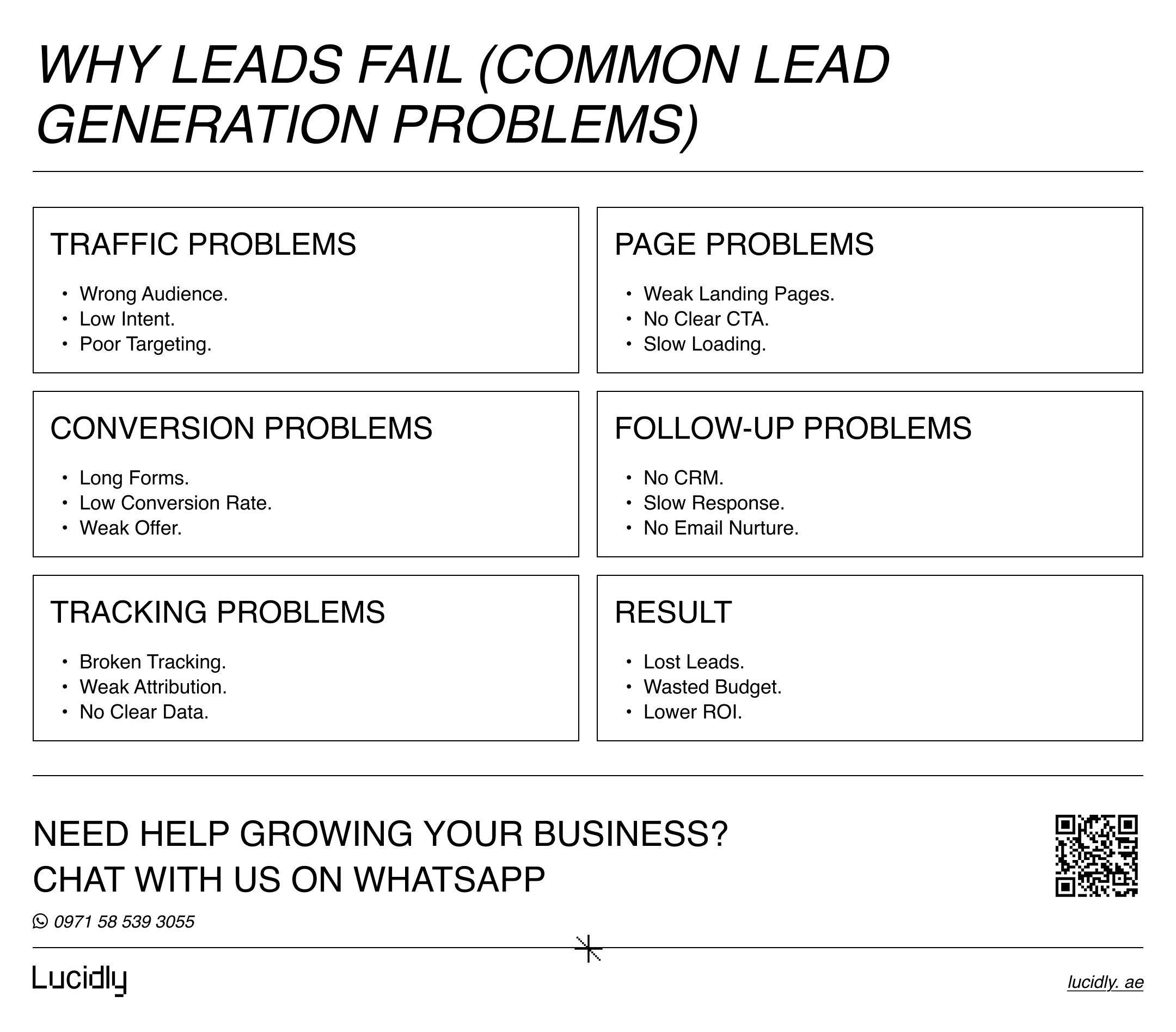
How to Improve Lead Quality (Not Just Volume)
More leads do not always mean better results.
Improve traffic quality through better targeting.
Align messaging between ads and landing pages.
Qualify users through smarter form questions.
Focus on users closer to decision stage.
Track MQL vs SQL conversion rates.
Better quality leads usually reduce wasted effort and improve ROI.
Key Metrics for Lead Generation Performance
Measurement is what turns activity into improvement.
Conversion rate: percentage of visitors who become leads.
CPL (Cost Per Lead): how much each lead costs.
Lead-to-sale rate: how many leads become customers.
Channel contribution: which channel performs best.
Funnel drop-off: where users leave the process.
Tracking these digital marketing performance metrics helps optimise results over time.
Traffic vs Leads: Understanding the Difference
The difference between traffic and leads becomes clearer when the two are compared side by side.
Aspect | Traffic | Leads |
Definition | Number of visitors | Users who take action |
Intent | May be low or mixed | High intent |
Value | Awareness | Potential revenue |
Measurement | Sessions, page views | Form submissions, enquiries |
Conversion | Not guaranteed | Indicates real interest |
Business Impact | Indirect | Direct |
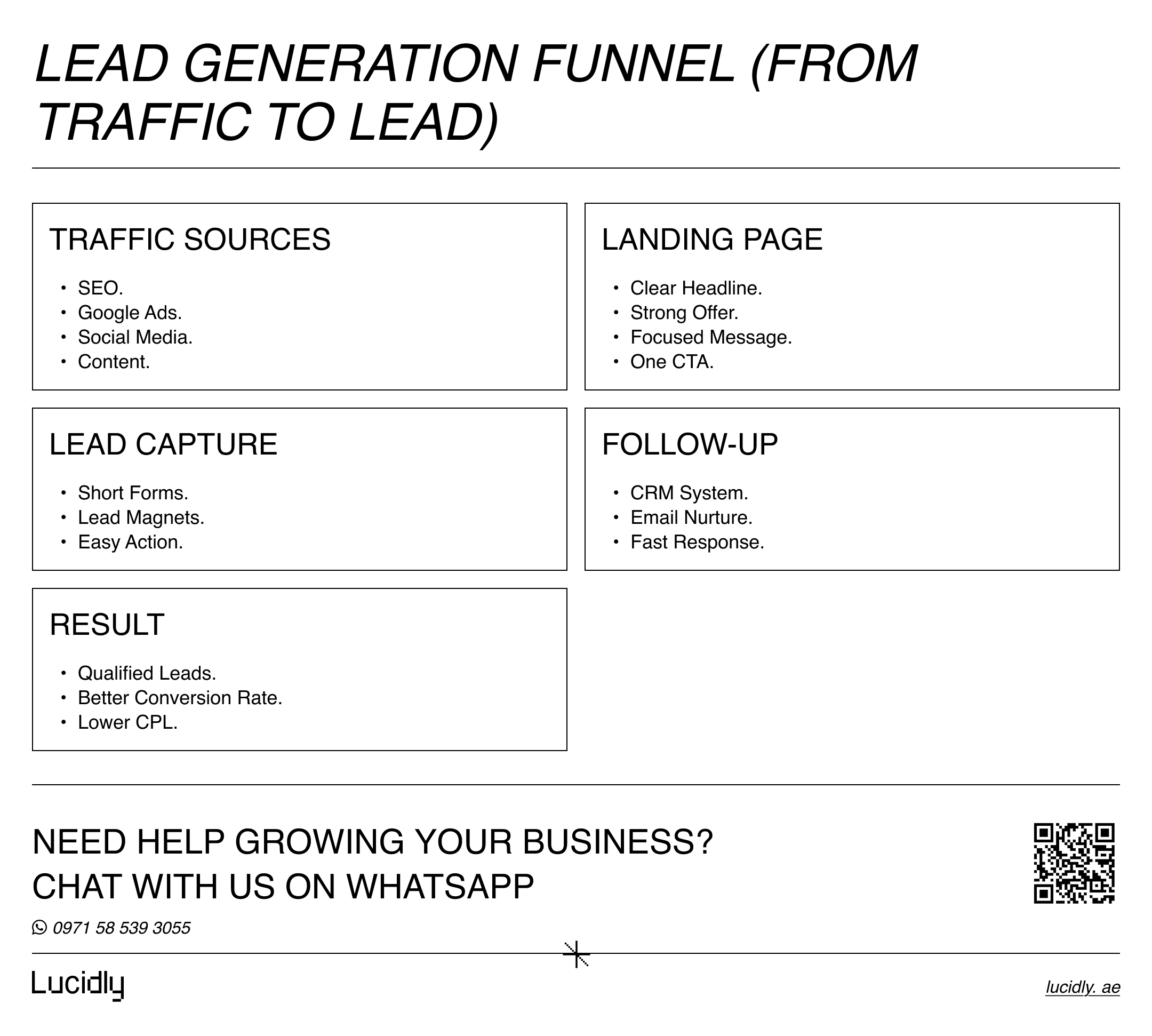
From Click to Customer: Building a Strong Funnel
A working funnel connects all stages of the journey.
Awareness: SEO, ads, content.
Consideration: landing pages, messaging, offers.
Conversion: forms, CTAs, lead magnets.
Follow-up: CRM, email nurture, calls.
Optimisation: testing, data, improvements.
A complete funnel improves both volume and quality of leads.
Businesses that want a clearer path from traffic to qualified enquiries often benefit from a more structured digital marketing service built around conversion, tracking, and follow-up.
FAQs
What is lead generation in digital marketing?
It is the process of turning online visitors into potential customers through forms, calls, or enquiries.
Which channels generate the best leads?
SEO and Google Ads usually generate high-intent leads, while social and email support nurturing and conversion.
How do I improve lead quality?
Improve targeting, refine messaging, optimise landing pages, and use better qualification in forms.
What is the difference between traffic and leads?
Traffic refers to visitors, while leads are users who take action and show interest in your service.
How do I track cost per lead?
Divide total marketing spend by the number of leads generated to calculate CPL.
Lead generation in digital marketing becomes effective when businesses focus on structure, not just activity.
The combination of the right traffic, strong landing pages, clear offers, and fast follow-up creates a system that consistently turns visitors into qualified enquiries.
Businesses that measure, optimise, and refine this system over time are far more likely to improve both lead quality and ROI.
For clearer guidance on building a stronger lead generation system, Message Lucidly on WhatsApp or use the phone numbers listed on the Contact Us page.
References
HubSpot – Lead Generation Strategies Guide
https://blog.hubspot.com/marketing/lead-generationGoogle Analytics Help – Measure Conversions and Goals
https://support.google.com/analytics/answer/1012040Salesforce – What Is Lead Generation?
https://www.salesforce.com/resources/articles/lead-generation/