Lead generation in 2026 depends less on doing more, and more on making better decisions across channels. Businesses usually get stronger results when messaging, content, ads, landing pages, follow-up, and reporting work as one system.
The goal is not just traffic. The goal is qualified enquiries, better conversion paths, and clearer measurement.
A practical lead-generation article should help readers understand what to prioritise, what to track, and how to improve results without turning marketing into scattered activity.
For practical help with lead generation planning, Message Lucidly on WhatsApp.
Why lead generation needs a clearer structure in 2026
The fastest way to waste budget is to run campaigns without a connected plan. A better approach starts with priorities, buyer intent, and conversion logic.
An integrated digital marketing strategy helps connect awareness activity with real conversion goals.
For readers asking What Is Digital Marketing, the practical answer is simple: it is the structured use of online channels to attract, engage, and convert the right audience.
Stronger lead generation usually starts with clear goals and objectives, not with random posting or ad spend.
Better performance also depends on understanding the customer journey before choosing platforms.
Results improve when businesses define a useful channel mix instead of expecting every channel to do the same job.
How to build a practical plan for more leads
A strong article should move quickly from concept to application. The reader needs a usable process, not broad theory.
Start with goals, offer, and buyer intent
Before channel selection, the business needs to define what kind of lead it wants and what action matters most.
Set measurable goals and objectives around qualified leads, conversion, or sales opportunities.
Choose a small group of KPIs such as cost per lead, landing page conversion rate, and lead-to-sale rate.
Match the offer to real buyer intent rather than generic visibility goals.
Check how the message changes across the main funnel stages.
Use this foundation to shape a realistic digital marketing plan.
Choose channels by role, not by trend
Once the commercial direction is clear, channel decisions become easier and more cost-effective.
Build a marketing strategy for digital channels that gives each platform one clear job.
Use SEO and content for demand capture over time.
Use paid search when the audience shows high intent.
Use retargeting to bring back undecided visitors.
Use email or CRM automation to improve lead follow-up.
Support execution with a focused online marketing strategy and a clear media plan.
Keep timing organised with a practical campaign calendar.
What a strong structure should include
This section is where the article becomes directly useful. Readers should be able to apply the model without turning it into a heavy framework.
A useful digital marketing strategy framework should cover audience, offer, message, channels, conversion path, and reporting.
Clear digital marketing strategy steps often include defining goals, mapping intent, selecting channels, preparing assets, launching campaigns, and reviewing performance.
A workable plan should also explain ownership, budget priorities, and what gets checked weekly or monthly.
Good reporting should not stop at click volume. It should connect leads, quality, and sales progression.
Smart review cycles depend on better attribution, especially when multiple channels influence the same lead.
To see how this structure can be applied in practice, explore the services of the first digital marketing company in UAE.
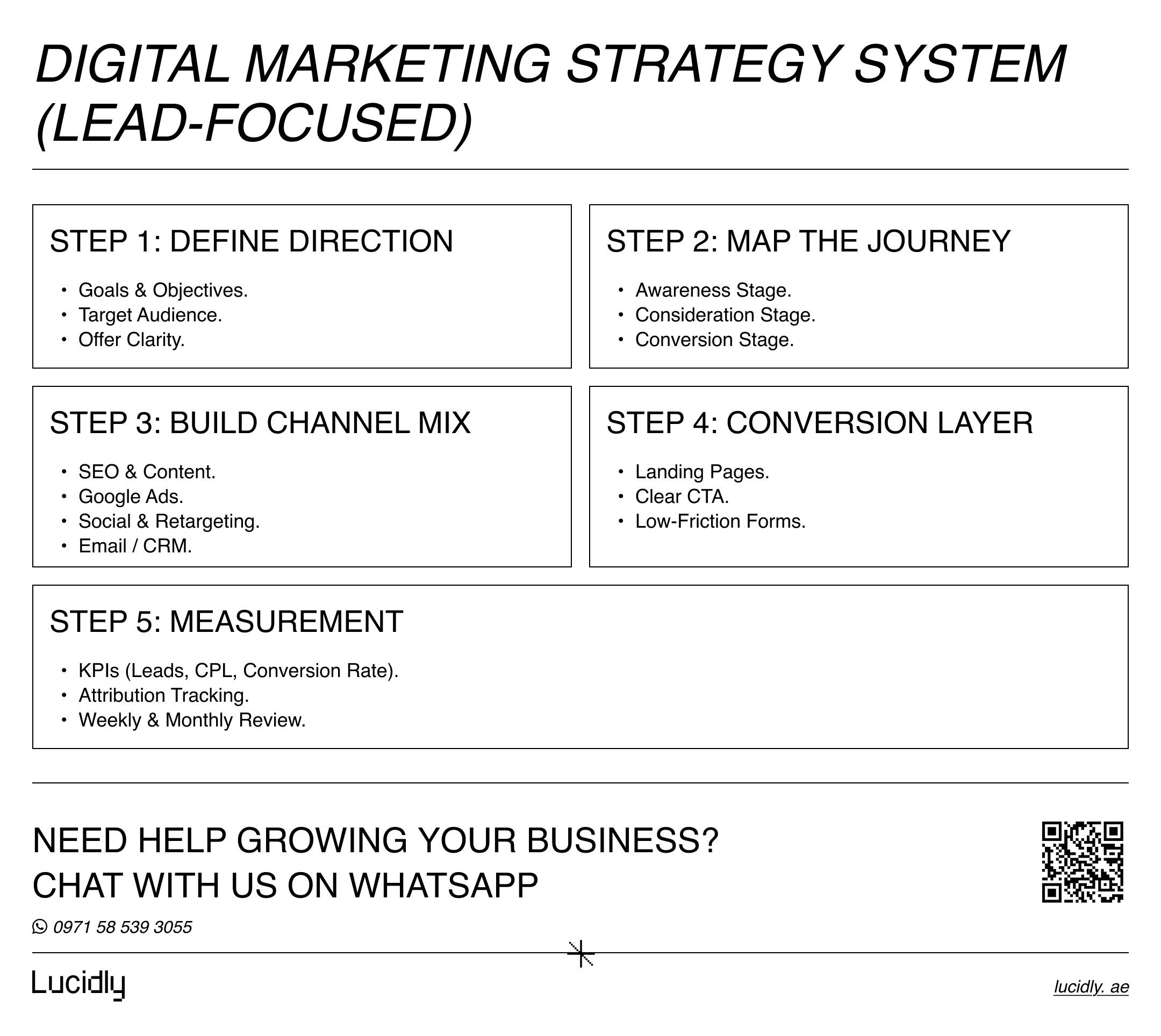
A simple way to apply this in practice
Readers usually understand faster when strategy becomes concrete. That is why a short operational model adds real value.
A clear digital marketing strategy template can include audience segment, core offer, key message, lead source, CTA, budget range, and review frequency.
A short digital marketing strategy example could combine SEO content, Google Ads, one focused landing page, Meta retargeting, and fast CRM follow-up.
This model works especially well when every campaign points to one clear action instead of too many competing options.
It also helps businesses compare lead source quality, not just traffic volume.
For sectors such as Digital Marketing Real Estate Agents, the same structure can be adapted around listing pages, area pages, retargeting, and quicker sales follow-up.
As execution grows, many businesses also start assessing Digital Marketing Agencies in the UAE based on how well they connect planning, conversion, and measurable outcomes.
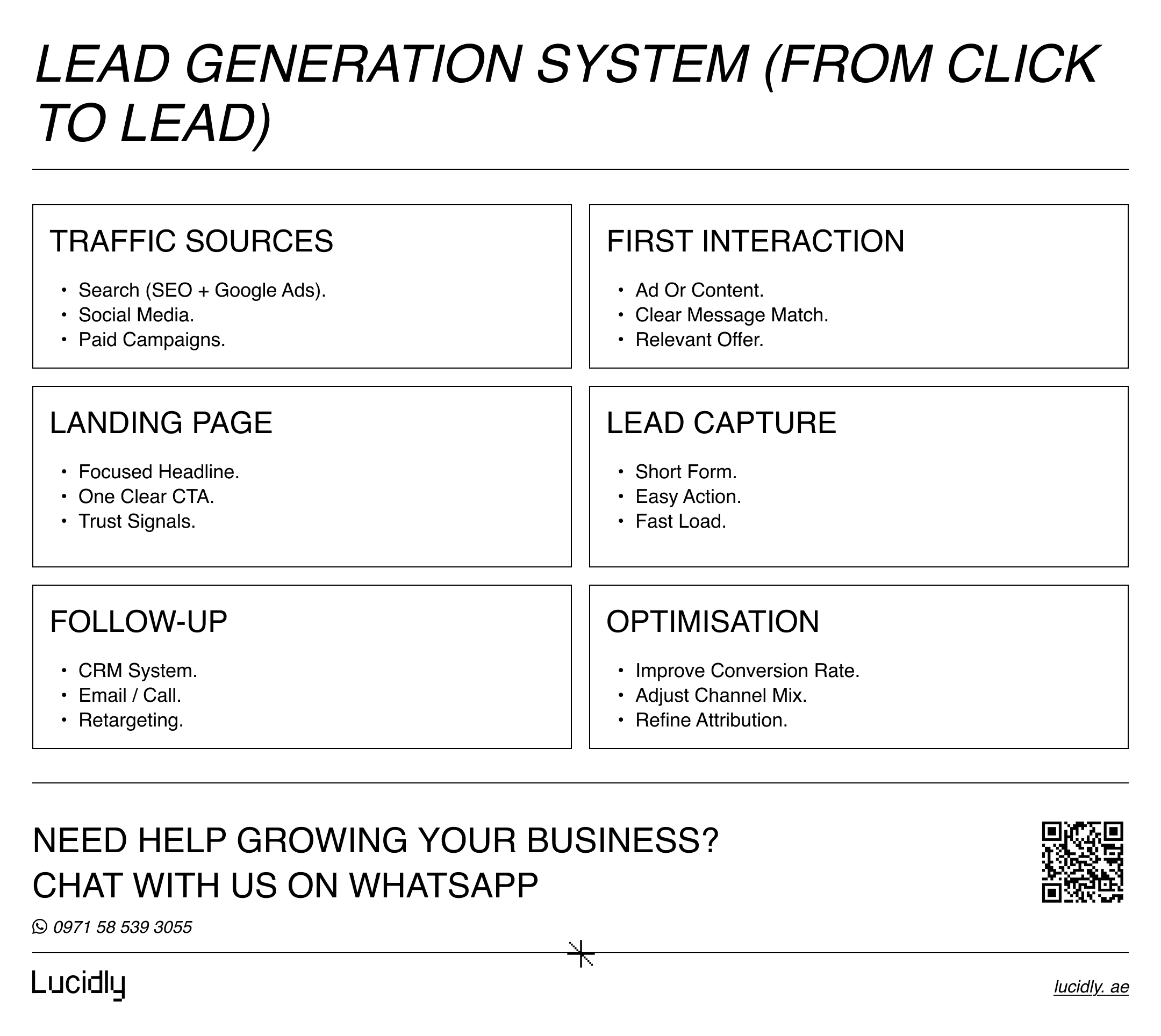
Where outside support becomes useful
Some businesses can manage this internally for a while. Others need support once the number of channels, campaigns, and reporting requirements grows.
Many brands start comparing Digital Marketing Companies in Dubai when they need better coordination between ads, SEO, content, landing pages, and reporting.
The right support model should improve clarity, not add more noise.
A strong partner should explain priorities, expected lead paths, and review logic before expanding activity.
Businesses should also evaluate whether the team understands conversion, not just reach.
FAQs
These questions help complete the article around search intent and practical decision-making.
How do I create a digital marketing strategy?
Begin with business goals, audience intent, offer clarity, channel roles, and a reporting model that ties activity to lead quality.
What should a digital marketing plan include?
It should include goals, audience segments, message priorities, channel mix, landing pages, KPIs, a media plan, a campaign calendar, and follow-up logic.
What KPIs matter most?
The most useful KPIs often include qualified leads, cost per lead, conversion rate, lead-to-sale rate, and channel contribution.
How often should I review strategy?
Review top-line lead performance weekly, review channel quality monthly, and review budget or structural decisions quarterly.
What is the difference between strategy and tactics?
Strategy defines direction, priorities, and measurement. Tactics are the specific activities used to execute that direction.
The businesses that generate better leads in 2026 are usually not the ones doing the most. They are the ones using a clearer digital marketing strategy, reviewing performance consistently, and improving the path from first click to real enquiry.
For clearer guidance on building a stronger digital marketing strategy for better lead generation in 2026, Message Lucidly on WhatsApp or use the phone numbers listed on the Contact Us page.
References
Google Search Central – SEO Starter Guide
https://developers.google.com/search/docs/fundamentals/seo-starter-guideHubSpot – Digital Marketing Strategy Guide
https://blog.hubspot.com/marketing/digital-marketing-strategy-guid