Search engine optimization doesn’t usually fail because people don’t try hard enough.
It fails because beginners repeat the same SEO mistakes—often without realizing they’re doing anything wrong.
From targeting the wrong keywords to publishing thin content or ignoring local SEO signals, these errors quietly block visibility, traffic, and conversions.
In this guide, we’ll break down the most common SEO mistakes beginners make, explain why they hurt rankings, and show you exactly how to avoid or fix them—using modern, safe SEO practices that work in 2026.
Message Lucidly on WhatsApp to get a clear SEO diagnosis and a practical action plan that fixes the mistakes holding your site back—without shortcuts or risk.
How Do You Know If You Have an SEO Problem?
Before diving into specific mistakes, it’s important to recognize the warning signs that something isn’t working.
If any of the following sound familiar, you’re likely dealing with one or more SEO errors:
Your pages are indexed, but barely get impressions or clicks
You publish content consistently, yet nothing ranks on page one
Traffic from Google is flat or declining
The “wrong” pages rank instead of your core service pages
Users land on your site but don’t engage or convert
These signals don’t mean SEO is “dead.” They usually mean basic optimization mistakes are holding your site back.
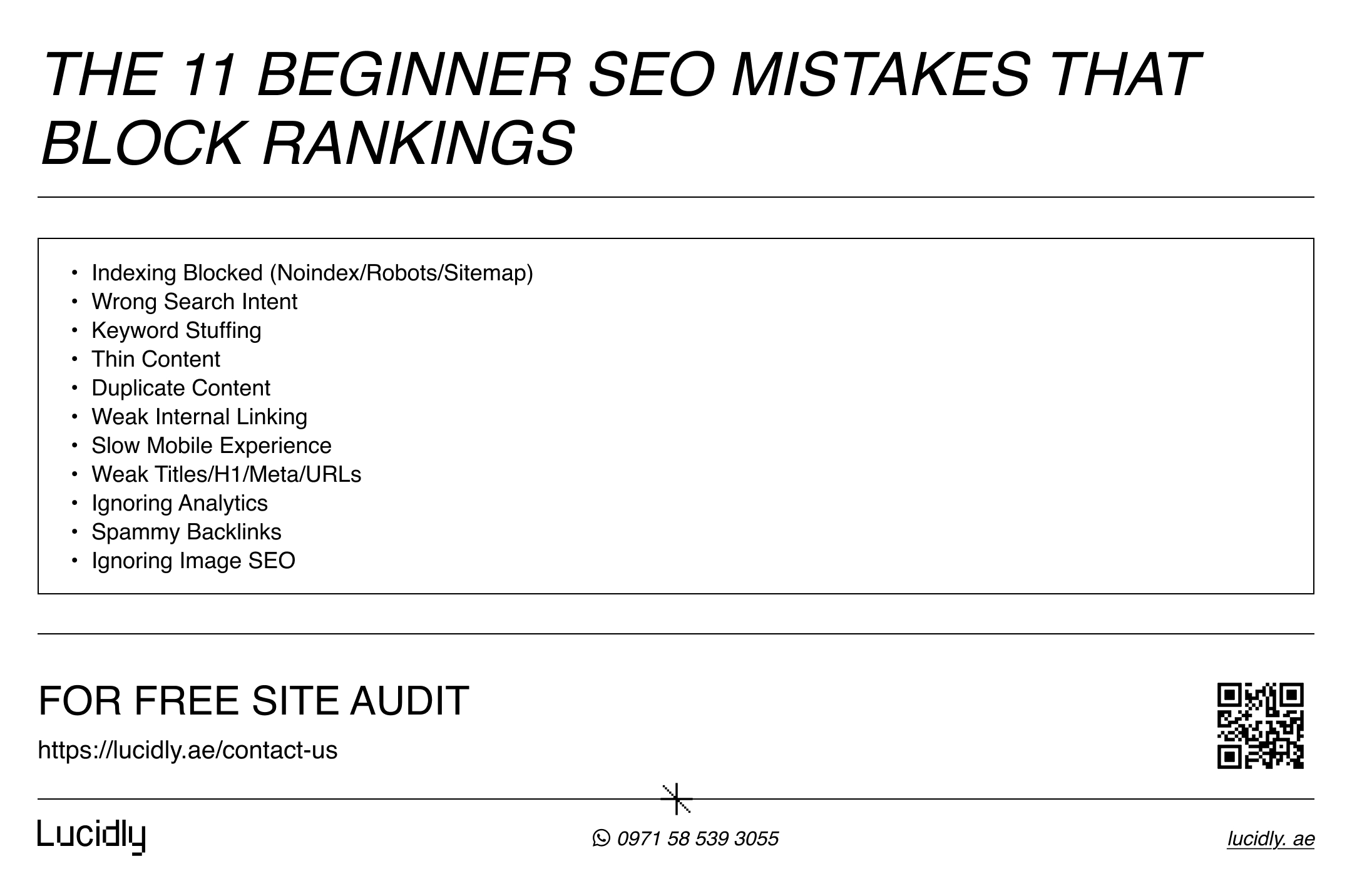
The Most Common SEO Mistakes Beginners Make
Each mistake below follows the same structure:
what it looks like → why it hurts → how to fix it.
1. Blocking Crawling or Indexing Without Realising It
One of the most common SEO mistakes beginners make is unintentionally preventing search engines from accessing important pages.
This issue is especially common on new websites or after redesigns, where small technical changes create major visibility problems.
It often happens when:
Important pages are set to noindex.
Robots.txt blocks key sections.
XML sitemaps are missing or outdated.
Pages return redirect or canonical errors.
Why it hurts:
If Google can’t crawl or index a page, it cannot rank—no matter how good the content is.
How to avoid it:
Check the Indexing report in Google Search Console.
Test key URLs using the URL Inspection tool.
Keep your sitemap clean and updated.
2. Choosing Keywords Without Understanding Search Intent
Many beginners focus on keywords without asking why users search for them.
For example:
Targeting “SEO agency Dubai” with a blog article
Writing a sales page for a keyword that implies research or comparison
Why it hurts:
When content doesn’t match search intent, Google may rank it briefly—but users won’t engage, and rankings won’t last.
How to avoid it:
Analyse top-ranking pages before creating content by doing better keyword research.
Match page type to intent (guide, service page, comparison, FAQ).
Design each page to answer the real user question.
3. Keyword Stuffing and Over-Optimisation
One of the most common SEO mistakes beginners make is repeating the target keyword too often, thinking it will boost rankings. In modern SEO, that approach is no longer “optimisation”—it’s a risk.
Keyword stuffing usually looks like:
Awkward repetition in headings and paragraphs.
Unnatural phrasing written “for Google” instead of people.
Why it hurts:
It damages readability, reduces trust, and can trigger spam-quality signals.
How to avoid it:
Write naturally first, optimise second.
Use synonyms, variants, and supporting terms.
Focus on clarity, not density.
If it sounds bad when read aloud, it’s over-optimised.
4. Publishing Thin or Surface-Level Content
Thin content is one of the most common SEO problems on small and new websites.
Examples include:
200-word service pages with no depth.
Generic blog posts that repeat what everyone else says.
Pages with no examples, explanations, or next steps.
Why it hurts:
Google prioritises content that demonstrates usefulness, depth, and real value.
How to avoid it:
Expand pages with practical details, FAQs, and context.
Answer follow-up questions users are likely to have.
Make the page genuinely helpful—not just “present”.
5. Duplicate Content Across Pages
Duplicate content doesn’t always come from copying other websites.
Often, it comes from copying yourself.
Common cases include:
Multiple city pages with identical text.
Reused product or service descriptions.
Duplicate meta titles and descriptions.
Why it hurts:
Google struggles to understand which version should rank, weakening all of them.
How to avoid it:
Write unique content for each important page.
Use canonical tags correctly.
Merge or differentiate similar pages.
6. Ignoring Internal Linking
Internal links aren’t just navigation—they’re one of the simplest ways to strengthen your site structure and help search engines understand how your pages connect. Yet ignoring internal linking is a surprisingly common SEO mistake and one of the easiest SEO mistakes to avoid.
Beginners often:
Publish content without linking it to core pages.
Forget to update older articles with new links.
Why it hurts:
Important pages don’t receive enough internal authority or context.
How to avoid it:
Link from blog posts to relevant service pages.
Use descriptive anchor text.
Build clear topic clusters.
7. Poor Mobile Experience and Slow Page Speed
A website that feels slow or broken on mobile will struggle—regardless of content quality for mobile seo.
Common issues include:
Heavy images.
Too many scripts.
Layout shifts and delayed interaction.
Why it hurts:
Google uses mobile-first indexing and prioritises good page experience.
How to avoid it:
Optimise images and fonts.
Improve Core Web Vitals (LCP, INP, CLS).
Test pages on real mobile devices.
8. Weak On-Page SEO Basics
Many beginner SEO mistakes come from ignoring on-page seo fundamentals, such as:
Vague or duplicated title tags.
Missing or unclear H1 headings.
Long, messy URLs.
Why it hurts:
Search engines rely on these signals to understand what your page is about.
How to avoid it:
Write clear, specific titles with intent.
Use one strong H1 per page.
Keep URLs simple and descriptive.
9. Ignoring Analytics and Search Data
Publishing content without tracking performance is like driving with your eyes closed.
This usually shows up as:
No conversion tracking.
No review of Search Console queries.
Decisions based on assumptions, not data.
Why it hurts:
You can’t improve what you don’t measure.
How to avoid it:
Use Google Analytics and Search Console together.
Track leads, calls, and form submissions.
Optimise pages based on real search queries.
10. Building Spammy or Low-Quality Backlinks
Buying links or using automated link-building tools is still one of the biggest SEO pitfalls.
These practices often promise “fast rankings” but deliver long-term damage.
Why it hurts:
Spammy backlinks isn’t the best off-page seo practice, cause it reduce trust and may trigger manual or algorithmic penalties.
How to avoid it:
Focus on earning links through quality content.
Build relationships, not link schemes.
Prioritise relevance and context over volume.
11. Ignoring Image SEO
Images are often uploaded as an afterthought.
Common mistakes include:
Large file sizes.
Missing alt text.
Random file names.
Why it hurts:
Unoptimised images slow pages and miss search visibility opportunities.
How to avoid it:
Compress images and use modern formats.
Write descriptive alt text.
Name files clearly.
UAE-Specific SEO Mistakes That Cost Local Visibility
If your business targets the UAE market, some mistakes are especially damaging.
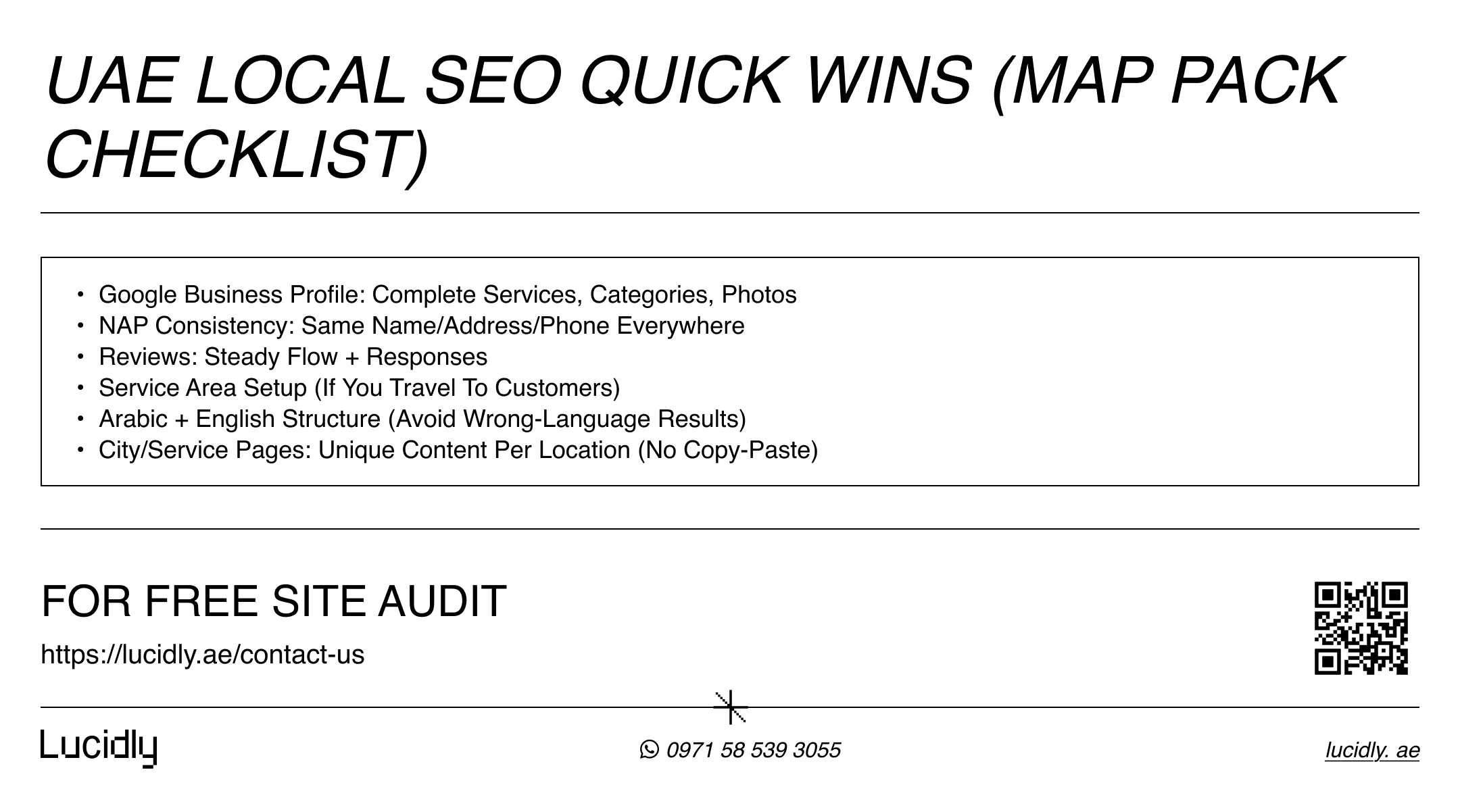
Ignoring Local SEO and Google Business Profile
Many businesses in Dubai or Abu Dhabi fail to:
Fully optimise their Google Business Profile.
Set the correct service areas.
Keep business details consistent across platforms.
This directly affects map rankings and local trust.
Poor Arabic / English Website Structure
Websites targeting both Arabic and English audiences often:
Lack proper language targeting
Show the wrong version in search results
Correct language structure and clear signals are essential for visibility in the UAE.
Want help implementing this checklist across your key pages? Learn more and request on-page support from our Professional SEO company.
Can You Recover From Bad SEO?
Yes—almost always.
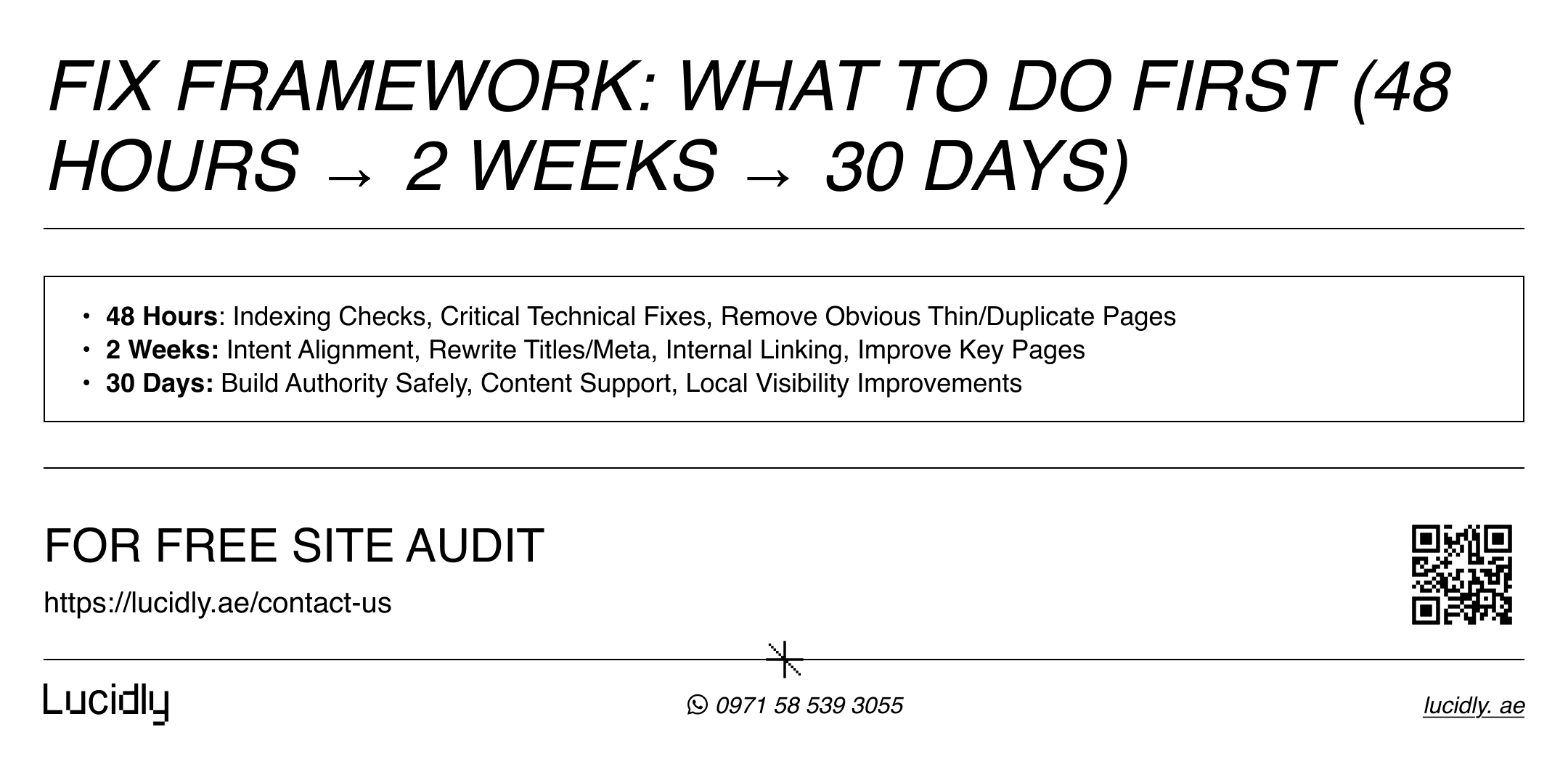
A simple recovery framework:
Short term: fix indexing, technical errors, and thin pages
Mid term: align content with intent and improve internal linking
Long term: build authority, trust, and local relevance
SEO mistakes compound—but so do fixes.
Frequently Asked Questions
What are the most common SEO mistakes?
Indexing issues, thin content, keyword stuffing, poor on-page optimisation, and spammy backlinks.
How do I know if I have an SEO problem?
Low impressions, weak engagement, stagnant traffic, or pages ranking for the wrong queries.
Can I recover from bad SEO?
Yes. Most issues are reversible with proper audits and structured improvements.
Does using too many keywords hurt rankings?
Yes. Overuse reduces quality and can negatively affect trust and performance.
Final Thought
SEO rarely fails because of one big mistake.
It fails because of many small ones left uncorrected.
Fix a few of these common SEO mistakes, and you’ll often see clearer signals, better rankings, and stronger long-term growth—especially in competitive markets like the UAE.
Contact us for an SEO mistakes audit—message us on WhatsApp and we’ll identify what’s holding your rankings back, then give you a clear, safe fix plan.
References
Google Search Central — Spam Policies (Keyword stuffing, link spam, etc.)
Google Business Profile Help — Tips to improve local ranking (relevance, distance, prominence)
TDRA / .aeDA — .ae domain policies (UAE official source)